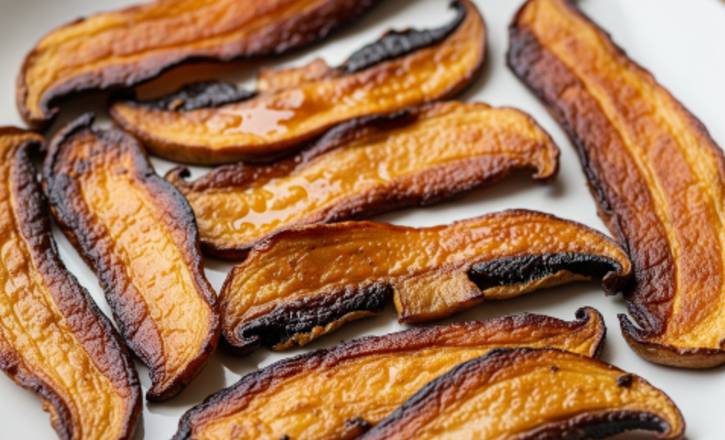
In the professional kitchen, we do not view plant-based alternatives as mere substitutes for meat.
Instead, we view them as an opportunity to explore the fundamental principles of cooking: the extraction of moisture, the concentration of flavor, and the mastery of the Maillard reaction. How to cook Shroomacon is not simply a matter of heating a pan; it is a lesson in patience and precision.
Shroomacon—the thin-sliced, woodsy mushroom mimicking the smokiness of bacon—requires a disciplined hand. To achieve that coveted shatter-crisp texture while preserving the deep, savory umami, we must treat the mushroom with the same reverence we would a fine piece of charcuterie.
By controlling the fat, the heat, and the thinness of the cut, we elevate a simple fungi into a sophisticated culinary component.
The Foundation: Ingredients & Tools
Note: As always, excellence begins with the quality of your source. Select the freshest King Oyster or Shiitake mushrooms for their density and structure.
- Prep time: 15 minutes
- Cook time: 20–25 minutes
- Tools: A Japanese mandoline, a heavy-bottomed stainless steel or cast-iron skillet, and parchment paper.
The Components:
- 300g King Oyster mushrooms (stems only) or large Shiitake caps
- 30g Clarified butter (Ghee) or a high-smoke point neutral oil (like Grapeseed)
- 5g Smoked Maldon sea salt
- 2g Freshly cracked black pepper
- Optional: A drop of high-quality liquid smoke or a brush of maple syrup (if a sweeter profile is desired).
Methodical Execution: Step-by-Step
Step 1: The Precision Cut
Uniformity is the hallmark of professional cooking. Using a mandoline, slice the mushrooms lengthwise into ribbons approximately 2mm thick.
If the slices are too thick, they will remain chewy; if too thin, they will disintegrate. We seek the “sweet spot” where the mushroom can dehydrate and crisp simultaneously.
Step 2: Moisture Removal (The Pre-Sear)
Mushrooms are roughly 90% water. To achieve a “bacon-like” crunch, that water must be evaporated. Lay the slices on a tray lined with paper towels and press another towel on top. Let them sit for 10 minutes.
This ensures that when they hit the pan, they sear rather than steam.
Step 3: The Tempering of the Fat
Place your skillet over medium heat. Add the clarified butter. We use clarified butter because the milk solids have been removed, allowing for a higher cooking temperature without burning.
Wait until the fat shimmers—this is your cue that the pan is ready to receive the ingredient.
Step 4: The Controlled Sear
Lay the mushroom slices in the pan in a single layer. Do not crowd the pan. If you add too many at once, the temperature drops, and the mushrooms will boil in their own juices.
- Cook for 3–4 minutes on the first side until golden brown.
- Carefully flip each slice using tweezers or small tongs.
- Apply a small amount of weight—perhaps another heavy pan or a weighted press—to ensure even contact with the heat.
Step 5: The Glaze and Seasoning
In the final minute of cooking, lightly brush the slices with a touch of maple syrup or liquid smoke if you desire that traditional bacon profile. Season immediately with the smoked sea salt.
The salt must hit the mushroom while the fat is still hot so it adheres to the surface.
Step 6: The Final Rest
Remove the Shroomacon from the pan and place it on a wire cooling rack. Do not place them on paper towels at this stage, as the trapped steam will make the bottom soggy.
As they cool, the fibers will tighten, and the “bacon” will reach its maximum crispness.
Conclusion: The Philosophy of the Fungi
Cooking is an act of transformation. When you master how to cook Shroomacon, you are doing more than making a snack; you are practicing the discipline of texture.
Whether served alongside a soft-poached egg or crumbled over a refined velouté, this preparation proves that with the right technique, even the most modest ingredients can achieve greatness.
FAQ
Q: Why did my Shroomacon turn out bitter?
A: Bitterness is usually a sign of scorched fat or burnt mushroom fibers. If the heat is too high, the delicate sugars in the mushroom carbonize too quickly.
Maintain a steady medium heat and look for a deep mahogany color, not black.
Q: Can I bake Shroomacon in the oven instead of a pan?
A: You can, though you lose the direct contact heat that creates the best texture. If using an oven, bake at 325°F (160°C) on a rack-lined baking sheet for 20–30 minutes, turning halfway through.
It is a more forgiving method but lacks the “snap” of the stovetop version.
Q: How do I store leftovers?
A: Shroomacon is best enjoyed immediately. However, you can store it in an airtight container with a silica gel packet (if available) for 24 hours.
To regain the crispness, flash it in a hot pan for 30 seconds before serving.