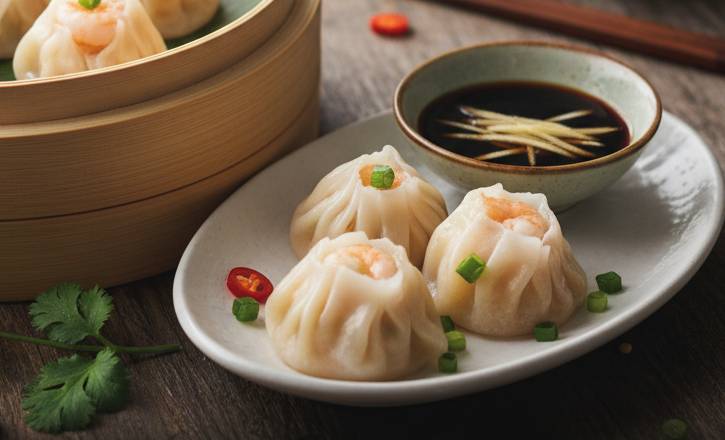
Few dishes capture the essence of Cantonese dim sum quite like har gow, the delicate steamed shrimp dumpling.
Known for its translucent, slightly chewy wrapper and succulent shrimp filling, har gow is a true test of a dim sum chef’s skill. While often enjoyed in bustling teahouses, creating these culinary gems at home is a rewarding experience that brings a taste of authentic Hong Kong to your kitchen.
Don’t be intimidated by the seemingly intricate process; with a bit of patience and this detailed guide, you’ll be steaming up perfect har gow in no time.
Ingredients
For the Filling:
- 1 lb (450g) raw shrimp, peeled, deveined, and roughly chopped (leave some chunks for texture)
- 1 tablespoon bamboo shoots, finely diced (canned, rinsed, and drained)
- 1 tablespoon pork fat, finely diced (optional, but adds richness and juiciness)
- 1 teaspoon fresh ginger, grated
- 1 teaspoon cornstarch
- 1/2 teaspoon white pepper
- 1/2 teaspoon sugar
- 1/4 teaspoon salt
- 1 tablespoon sesame oil
- 1 tablespoon Shaoxing wine (or dry sherry)
- 1 teaspoon soy sauce
For the Wrapper:
- 1 cup (120g) wheat starch (also called Tang Mian Fen)
- 1/2 cup (60g) tapioca starch
- 1 cup (240ml) boiling water
- 1 tablespoon cooking oil (e.g., vegetable or canola)
Equipment Needed
- Large mixing bowl
- Rolling pin or pasta maker
- Steamer basket (bamboo or metal)
- Parchment paper or cabbage leaves (for steaming)
Step-by-Step Instructions
Step 1: Prepare the Shrimp Filling
In a large bowl, combine the chopped shrimp, diced bamboo shoots, diced pork fat (if using), grated ginger, cornstarch, white pepper, sugar, salt, sesame oil, Shaoxing wine, and soy sauce.
Mix thoroughly by hand for 3-5 minutes, lifting and slapping the mixture against the bowl. This process develops the shrimp’s protein, resulting in a bouncier texture. Cover and refrigerate for at least 30 minutes, or up to an hour, to allow the flavors to meld and the mixture to firm up.
Step 2: Make the Har Gow Wrapper Dough
In a separate heatproof bowl, combine the wheat starch and tapioca starch. Gradually pour in the boiling water, stirring constantly with chopsticks or a wooden spoon until a shaggy dough forms. Be careful as the water is hot.
Once slightly cooled, add the cooking oil and knead the dough on a lightly floured surface (using a bit of tapioca starch) until it’s smooth and pliable, about 5-7 minutes. The dough should be soft and elastic. Keep the dough covered with a damp cloth or plastic wrap to prevent it from drying out while you work.
Step 3: Form the Har Gow Wrappers
Take a small portion of the dough (about the size of a gumball). On a lightly oiled surface or a non-stick mat, use a small, flat metal scraper or a cleaver blade to flatten the dough into a thin, round wrapper, about 3-4 inches (7-10 cm) in diameter. Alternatively, you can use a rolling pin, but pressing with a flat object helps achieve the characteristic thinness.
The edges should be thinner than the center. Work quickly, keeping the remaining dough covered.
Step 4: Assemble the Har Gow
Place about 1-1.5 teaspoons of the chilled shrimp filling in the center of each wrapper. Fold the wrapper in half, bringing one edge over to meet the other. Pinch the center to seal. Starting from one end, create small pleats along the curved edge, pressing each pleat firmly against the back layer of the wrapper to seal it securely.
Aim for 7-10 pleats for a classic har gow look. The final shape should resemble a crescent moon with a ruffled edge. Repeat with the remaining dough and filling.
Step 5: Steam the Har
Gow Line your steamer basket with parchment paper or cabbage leaves to prevent sticking. Arrange the assembled har gow in the steamer, leaving a small space between each dumpling to prevent them from sticking together.
Bring water in your steamer pot to a rolling boil. Place the steamer basket over the boiling water, cover, and steam for 6-8 minutes, or until the shrimp turns pink and opaque, and the wrappers are translucent and glossy. Do not overcrowd the steamer; steam in batches if necessary.
Step 6: Serve and Enjoy!
Carefully remove the steamed har gow from the steamer. Serve immediately with your favorite dipping sauces, such as soy sauce, chili oil, or a mixture of rice vinegar and ginger slivers.
Tips for Success:
- Pork Fat is Key (Optional): While you can omit it, a small amount of finely diced pork fat in the filling adds incredible juiciness and flavor.
- Keep Dough Moist: Wheat starch dough dries out quickly. Always keep unused dough covered with a damp cloth or plastic wrap.
- Practice Makes Perfect: Don’t get discouraged if your first few wrappers aren’t perfect. Pleading har gow takes practice!
- Don’t Overcook: Oversteaming will make the shrimp tough and the wrappers gummy.
Conclusion
Making Cantonese har gow at home is a culinary journey that rewards you with fresh, flavorful, and incredibly satisfying dumplings. From preparing the perfectly textured shrimp filling to mastering the delicate pleating of the translucent wrapper, each step brings you closer to appreciating the artistry of dim sum.
While it may require a little effort, the taste of homemade har gow—tender shrimp encased in a soft, chewy skin—is truly unparalleled. So, gather your ingredients, clear your counter, and embark on this delicious adventure. Your taste buds (and your family and friends) will thank you!
FAQ
Q1: What is har gow and what makes it special?
A1: Har gow is a traditional Cantonese steamed dumpling filled primarily with shrimp. It’s special for its signature translucent, thin, and slightly chewy wrapper, which beautifully showcases the vibrant pink shrimp inside, and its incredibly succulent and flavorful filling.
Q2: What is wheat starch and why do I need it for the wrapper? Can I substitute it?
A2: Wheat starch (also known as “Tang Mian Fen” or “wheat gluten-free starch”) is a key ingredient that gives har gow its characteristic translucent and delicate texture. It’s crucial for achieving that signature look and feel. Unfortunately, there isn’t a direct substitute that will yield the same results. You can usually find it in Asian grocery stores.
Q3: My dough is too sticky/too dry. What did I do wrong?
A3:
- Too Sticky: This usually means you added too much hot water or didn’t knead enough. Try dusting your surface and hands with a little extra tapioca starch and continue kneading. If it’s still very sticky, you might need to add a tiny bit more wheat starch (be careful not to add too much, or it will become tough).
- Too Dry/Crumbly: This means you didn’t add enough hot water or the water wasn’t hot enough. It could also mean you kneaded it for too long without enough oil. You can try adding a few drops of hot water at a time and kneading to incorporate, but it’s often best to try making a new batch of dough if it’s too dry to salvage.
Q4: Do I really need to use pork fat in the filling?
A4: While optional, diced pork fat is highly recommended. It melts during steaming, adding incredible juiciness, richness, and a silky mouthfeel to the shrimp filling, preventing it from drying out. If you prefer not to use it, you can omit it, but the texture will be slightly different.
Q5: How do I get the wrapper thin enough and keep it from tearing?
A5:
- Keep Dough Warm & Covered: Work quickly and keep the unused dough covered with a damp cloth or plastic wrap to prevent it from drying out. Dried dough is prone to cracking.
- Oiled Surface: Lightly oiling your work surface (or using a non-stick mat) helps prevent sticking.
- Pressing Technique: Using a flat, firm object like a metal scraper or the side of a cleaver blade is often more effective than a rolling pin for achieving the traditional thinness and round shape quickly. Apply even pressure and rotate the dough.
- Practice: This is the part that requires the most practice! Don’t get discouraged if your first few aren’t perfect.
Q6: Can I prepare the filling or dough ahead of time?
A6:
- Filling: Yes, the shrimp filling can be prepared up to a day in advance and stored in an airtight container in the refrigerator. This allows the flavors to deepen.
- Dough: The dough is best used immediately after it’s made. While you can try to store it covered in the fridge for a few hours, it tends to lose some of its elasticity and can become harder to work with.
Q7: How many pleats should I aim for when sealing the har gow?
A7: Traditionally, har gow are known for having 7-10 pleats along the curved edge. This gives them their characteristic beautiful, ruffled appearance. Don’t worry if you can’t get that many right away; the most important thing is that they are sealed tightly to keep the filling in.
Q8: My har gow are sticking to the steamer. What can I do?
A8: Make sure you generously line your steamer basket. Parchment paper cut into circles with holes poked in it, or even fresh cabbage leaves, work wonderfully to prevent sticking. Also, ensure there’s enough space between each dumpling in the steamer so they don’t touch.
Q9: How long should I steam har gow?
A9: Generally, 6-8 minutes over actively boiling water is sufficient. The exact time can vary slightly depending on the size of your dumplings and the power of your steamer. The shrimp should turn opaque pink, and the wrappers should be completely translucent and slightly glossy. Oversteaming will make the shrimp tough and the wrappers gummy.
Q10: Can I freeze uncooked har gow?
A10: It’s generally not recommended to freeze uncooked har gow made with wheat starch wrappers, as the wrapper texture can degrade significantly upon thawing and steaming. Har gow is best made fresh and consumed immediately after steaming.
Q11: What are good dipping sauces for har gow?
A11: Har gow is delicious on its own, but common accompaniments include:
- Soy sauce
- Chili oil (for a spicy kick)
- A mixture of rice vinegar and thinly sliced ginger
- A light mixture of soy sauce and a few drops of sesame oil.