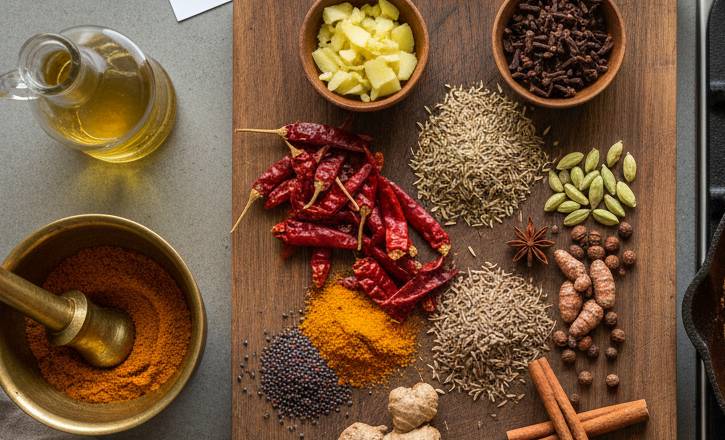
Vindaloo is a dish famed for its intense heat, but a truly authentic Vindaloo sauce offers much more than just spice.
Originating in Goa, India, and derived from a Portuguese dish (carne de vinha d’alhos), the hallmark of this cuisine is the vibrant tanginess and sharp vinegar base that cuts through the richness of the meat. Forget the one-note heat of restaurant versions or store-bought jars; crafting your own Vindaloo paste from scratch is the only way to achieve that complex, balanced flavor.
It’s a bold recipe, but the steps are surprisingly straightforward. Get ready to unlock a depth of flavor that will revolutionize your curry game.
Phase 1: Creating the Vindaloo Paste (The Flavor Core)
The paste is the heart of the Vindaloo. It must be made from whole, toasted spices to maximize flavor.
What You’ll Need (For the Paste):
- 10-15 Whole Dried Red Chilies (Use Kashmiri or Byadgi for color without overpowering heat; de-seed some for milder heat)
- 1 Tbsp Coriander Seeds
- 1 tsp Cumin Seeds
- 1 tsp Black Peppercorns
- 1/2 tsp Cloves (whole)
- 1/2 inch Cinnamon Stick
- 1 tsp Turmeric Powder
- 1 inch piece Fresh Ginger, roughly chopped
- 8-10 cloves Fresh Garlic, peeled
- 1/2 cup Malt Vinegar or Apple Cider Vinegar (The authentic acidic component)
- 1 Tbsp Brown Sugar or Jaggery (to balance acidity)
- Water (as needed to blend)
Instructions:
- Toast the Spices: In a dry skillet over medium heat, gently dry-roast the chilies, coriander seeds, cumin seeds, peppercorns, cloves, and cinnamon stick for 2-3 minutes, stirring constantly until they become fragrant. Do not let them burn!
- Soak (Optional): For a smoother paste, soak the toasted chilies in a small amount of warm water for 10 minutes.
- Blend the Paste: Transfer the toasted spices, turmeric powder, ginger, garlic, vinegar, and sugar into a high-speed blender or spice grinder. Blend, adding small amounts of water or extra vinegar as necessary, until you achieve a fine, smooth, thick paste. This paste should be intensely pungent.
Phase 2: Building the Sauce (The Simmer)
This step transforms the raw spice paste into a deeply flavorful, rich gravy.
What You’ll Need (For the Sauce Base):
- 2 Tbsp Oil (Vegetable or Canola)
- 1 large Onion, finely diced
- 1 cup Tomato Puree or canned Crushed Tomatoes
- 1/2 cup Chicken or Vegetable Broth (or water)
- Salt to taste
Instructions:
- Sauté the Aromatics: Heat the oil in a heavy-bottomed pot or Dutch oven over medium heat. Add the diced onion and cook slowly for 8-10 minutes until they are soft and deeply golden-brown. This caramelization is key to the gravy’s sweetness.
- Fry the Paste: Reduce the heat to low. Add the entire Vindaloo Paste you created. Cook for 5-7 minutes, stirring frequently. This process—where the paste darkens slightly and the oil begins to separate—is essential for taking away the raw flavor of the spices and aromatics.
- Build the Gravy: Stir in the tomato puree/crushed tomatoes. Cook for another 5 minutes, letting the tomato acid cook down.
- Simmer and Finish: Pour in the broth or water. Stir well, scraping up any spices from the bottom of the pot. Bring the sauce to a gentle simmer. This final sauce is now ready to receive your protein (traditionally pork, but often chicken or lamb).
Conclusion:
You’ve successfully mastered the crucial element of Indian Vindaloo: the sauce. The unique, powerful flavor comes directly from the bold combination of vinegar, garlic, and fiery chilies, beautifully balanced by the sweetness of the caramelized onions and a touch of sugar.
By toasting your whole spices and frying the resulting paste, you have ensured a complex, smoky, and fully developed flavor that jarred sauces simply can’t replicate.
Use this rich, tangy sauce with marinated pork, beef, chicken, or vegetables, and serve with fluffy Basmati rice and a cooling raita to counter the heat. You’re now a Vindaloo master!
FAQ
1. What is the key difference between Vindaloo and other Indian curries like Tikka Masala?
The key differentiator is vinegar. Vindaloo originates from a Portuguese recipe (carne de vinha d’alhos) and relies heavily on a vinegar-based marinade and a high concentration of garlic and chilies. Most North Indian curries (like Tikka Masala or Korma) use a base of cream, yogurt, or coconut milk, which results in a much sweeter and milder dish.
2. Do I have to use whole spices, or can I use ground spices instead?
For the absolute best and most authentic flavor, whole spices are highly recommended.
- Why? Toasting whole spices releases their essential oils just before grinding, resulting in a much more intense and aromatic paste than pre-ground spices, which quickly lose potency.
- If you must substitute: Use high-quality ground spices but skip the dry-roasting step. Blend them directly with the wet ingredients (ginger, garlic, vinegar).
3. What kind of vinegar should I use?
The best choices for authentic Goan flavor are:
- Malt Vinegar: Traditionally used and provides a sharp, strong tang.
- Apple Cider Vinegar: A great, milder substitute that still provides the necessary acidity.
- Coconut Vinegar: If you can find it at an Indian or Asian market, it provides the most traditional Goan sourness.
Avoid plain distilled white vinegar, as its flavor can be too harsh and less nuanced.
4. How can I control the heat level of the Vindaloo sauce?
You control the heat primarily through the dried red chilies:
- For Less Heat: Use Kashmiri or Byadgi chilies (which are known for color rather than extreme heat) and de-seed them before blending. The seeds contain most of the capsaicin (heat).
- For More Heat: Use higher-heat chilies like red Thai chilies or Guntur chilies, or add a small amount of cayenne pepper to the final sauce.
5. Can I prepare the Vindaloo paste in advance?
Yes, absolutely! The Vindaloo paste freezes and refrigerates very well.
- Refrigerate: Store the paste in an airtight jar in the fridge for up to 1 week.
- Freeze: Freeze the paste in an ice cube tray or small containers. It will keep well for up to 3 months, allowing you to make a quick curry anytime.