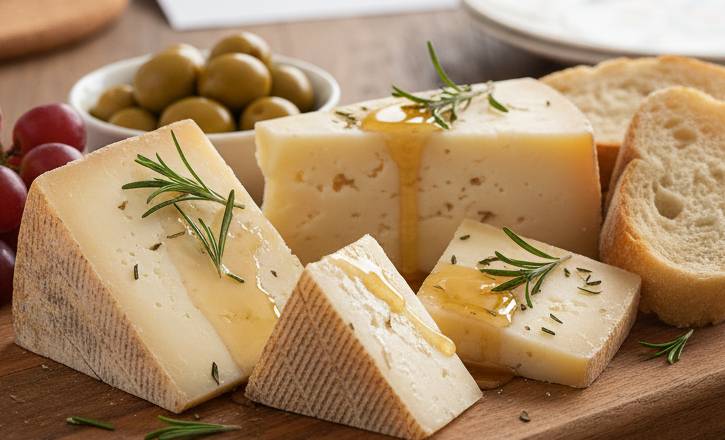
Manchego cheese, hailing from the La Mancha region of Spain, is a true culinary treasure. Made from the milk of Manchega sheep, its distinctive nutty, fruity, and slightly tangy flavor, coupled with a firm yet creamy texture, makes it a versatile star far beyond just a cheese board.
While excellent on its own, Manchego can elevate a variety of simple dishes, adding a sophisticated Spanish flair to your everyday cooking. If you’ve been curious to explore more ways to enjoy this beloved cheese, you’re in for a treat.
This article presents a collection of easy-to-follow recipes that celebrate the unique qualities of Manchego, proving it’s more than just a snack—it’s an ingredient that can transform simple meals into memorable culinary experiences.
Key Characteristics of Manchego Cheese:
- Origin: La Mancha, Spain (D.O.P. protected)
- Milk: 100% Manchega sheep’s milk
- Texture: Firm and compact, ranging from semi-firm (semi-curado) to hard (curado), with small, unevenly distributed air pockets.
- Flavor: Mild, buttery, and slightly acidic when young, developing into a richer, nuttier, and more piquant flavor with age.
- Rind: Characteristic “zigzag” pattern from esparto grass molds (inedible).
Simple Manchego Recipes
Here are three straightforward recipes designed to highlight the deliciousness of Manchego cheese:
Recipe 1: Manchego & Quince Paste Skewers (Appetizer)
This is a classic Spanish pairing for a reason – the salty, nutty cheese perfectly balances the sweet, floral quince.
Ingredients:
- 6 oz (170g) Manchego cheese, cut into 3/4-inch cubes
- 6 oz (170g) Membrillo (Quince Paste), cut into 3/4-inch cubes
- 12-15 small wooden skewers or toothpicks
Instructions:
- Prepare: Ensure both the Manchego cheese and quince paste are chilled for easier handling.
- Assemble: Thread one cube of Manchego, followed by one cube of quince paste, onto each skewer or toothpick.
- Serve: Arrange on a platter and serve immediately. These are perfect for a quick snack, party appetizer, or tapas spread.
Recipe 2: Manchego & Chorizo Toasts (Quick Bites)
A flavorful and hearty toast that’s perfect for breakfast, brunch, or a light lunch.
Ingredients:
- 4 slices rustic bread (sourdough or baguette slices work well)
- 2 tablespoons olive oil
- 2 oz (50g) Spanish chorizo, thinly sliced
- 3 oz (85g) Manchego cheese, shredded or thinly sliced
- Optional: Fresh parsley, chopped, for garnish
Instructions:
- Toast Bread: Preheat oven broiler to low or a toaster oven. Lightly brush both sides of the bread with olive oil. Toast lightly until golden brown. Alternatively, you can pan-fry the bread in olive oil.
- Sauté Chorizo: In a small skillet, cook the chorizo slices over medium heat for 2-3 minutes until slightly crispy and some fat has rendered. Remove from heat and set aside.
- Assemble Toasts: Place the toasted bread slices on a baking sheet. Arrange the cooked chorizo evenly over the bread. Top generously with the shredded or sliced Manchego cheese.
- Broil: Place the baking sheet under the broiler for 1-3 minutes, watching carefully, until the Manchego cheese is melted and bubbly.
- Serve: Remove from oven, garnish with fresh parsley if desired, and serve warm.
Recipe 3: Speedy Manchego & Spinach Pasta (Main Dish)
A simple, weeknight-friendly pasta dish where Manchego adds a delicious depth to a quick sauce.
Ingredients:
- 8 oz (225g) pasta of your choice (spaghetti, penne, or fusilli work well)
- 2 tablespoons olive oil
- 2 cloves garlic, minced
- 5 oz (140g) fresh spinach
- 1/2 cup (120ml) reserved pasta water
- 4 oz (115g) Manchego cheese, grated, plus more for garnish
- Salt and black pepper to taste
- Optional: A pinch of red pepper flakes for heat
Instructions:
- Cook Pasta: Bring a large pot of salted water to a boil. Add the pasta and cook according to package directions until al dente. Before draining, reserve about 1 cup of the starchy pasta water. Drain the pasta and set aside.
- Sauté Aromatics: While the pasta cooks, heat olive oil in a large skillet or pan over medium heat. Add minced garlic and optional red pepper flakes, cooking for 30 seconds until fragrant (do not brown).
- Wilt Spinach: Add the fresh spinach to the pan. Cook, stirring, until the spinach wilts down, about 2-3 minutes.
- Combine & Sauce: Add the cooked pasta to the skillet with the spinach and garlic. Pour in 1/2 cup of the reserved pasta water. Stir well.
- Melt Manchego: Remove the pan from the heat. Add the grated Manchego cheese to the pasta, tossing vigorously until the cheese melts and forms a creamy sauce. Add a little more pasta water if the sauce is too thick.
- Season & Serve: Season with salt and black pepper to taste. Divide into bowls, garnish with extra grated Manchego, and serve immediately.
Tips for Enjoying Manchego Cheese:
- Temperature: For optimal flavor, remove Manchego from the refrigerator about 30 minutes before serving.
- Pairings: It pairs beautifully with nuts (almonds, walnuts), olives, crusty bread, honey, and a variety of Spanish wines (Rioja, Tempranillo).
- Storage: Store Manchego wrapped in parchment paper (then loosely in plastic wrap or an airtight container) in the refrigerator to allow it to breathe and prevent drying out.
Conclusion
Manchego cheese is truly a gift from Spanish cuisine, offering a unique flavor profile that can elevate even the simplest dishes. From quick and elegant appetizers to satisfying main courses, these recipes demonstrate just how versatile and delightful Manchego can be beyond a cheese board.
So, the next time you find yourself with a wedge of this magnificent sheep’s milk cheese, don’t hesitate to experiment. Embrace its nutty richness and transform your everyday meals into a taste of la Mancha. Enjoy exploring the simple, delicious world of Manchego!
FAQ
Q1: What exactly is Manchego cheese?
A1: Manchego is a famous sheep’s milk cheese from the La Mancha region of Spain. It has a distinctive flavor profile—nutty, fruity, and slightly tangy—and a firm yet creamy texture. It’s easily recognizable by the traditional zigzag pattern on its rind.
Q2: Is Manchego cheese vegetarian?
A2: Traditional Manchego cheese is not vegetarian because it uses animal rennet. However, some producers make vegetarian versions using microbial rennet. Always check the label if you’re looking for a vegetarian option.
Q3: Can I eat the rind of Manchego cheese?
A3: The rind of Manchego cheese typically has a characteristic zigzag pattern from the esparto grass molds used during its production. While it’s generally not harmful if consumed, it’s quite tough and often treated with wax or anti-mold agents, so it’s not typically meant to be eaten. It’s best to cut it off.
Q4: How do I store leftover Manchego cheese?
A4: To keep Manchego fresh, wrap it first in parchment paper (this allows it to breathe), then loosely in plastic wrap or place it in an airtight container. Store it in the least cold part of your refrigerator (like the cheese drawer). This method helps prevent it from drying out while also preventing mold.
Q5: How long does Manchego cheese last in the refrigerator?
A5: Properly stored, a wedge of Manchego can last for several weeks to a couple of months in the refrigerator. Once cut, its shelf life shortens. If you notice any mold on the cut surface, you can usually cut off at least an inch around and below the mold, and the rest of the cheese should be fine.
Q6: What does “Membrillo” mean, and where can I find it?
A6: Membrillo is Spanish for “quince paste.” It’s a sweet, firm jelly-like preserve made from quince fruit. It’s a classic pairing with Manchego cheese. You can usually find membrillo in gourmet food stores, specialty cheese shops, or the international aisle of larger supermarkets.
Q7: Can I substitute other cheeses in these recipes if I don’t have Manchego?
A7: While Manchego offers a unique flavor, you could use other firm, nutty sheep’s milk cheeses like Pecorino Sardo or even a firm aged Monterey Jack for a similar texture in a pinch. However, the distinct flavor profile will change. For the pasta, Parmesan could also work but will taste different.
Q8: Why is it important to remove cheese from the refrigerator before serving?
A8: Serving cheese at room temperature (or slightly below) allows its full range of flavors and aromas to develop. When cheese is too cold, its fats are solidified, muting the taste and making the texture less enjoyable. About 30 minutes out of the fridge is usually sufficient.
Q9: Can I make the Manchego & Chorizo Toasts ahead of time?
A9: You can prep the components (toast bread, cook chorizo) ahead of time. However, it’s best to assemble and broil the toasts just before serving so the cheese is warm and bubbly, and the bread remains crisp.
Q10: Is the “pasta water” really necessary for the pasta recipe?
A10: Yes! The starchy pasta water is key for creating a silky, emulsified sauce. The starch helps bind the cheese and olive oil, creating a richer, creamier sauce that clings beautifully to the pasta. Don’t skip reserving it!