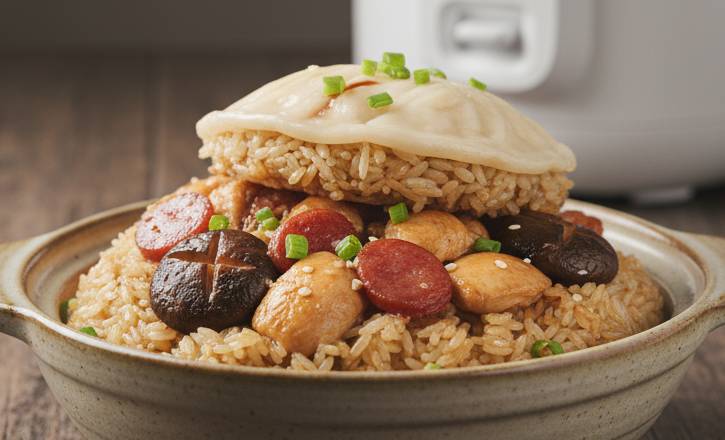
Lo Mai Gai, a quintessential Cantonese dim sum dish, conjures images of savory sticky rice packed with succulent chicken, earthy mushrooms, and flavorful Chinese sausage, all steamed to tender perfection. Traditionally, this dish involves pre-soaking, stir-frying, and then meticulously steaming individual parcels.
While undeniably delicious, it can be a time-consuming endeavor. But what if we told you that your trusty rice cooker, usually reserved for plain grains, could unlock the magic of Lo Mai Gai with surprisingly little effort? This revolutionary rice cooker method simplifies the process without sacrificing any of the deep, comforting flavors.
Get ready to transform your ordinary rice cooker into a dim sum powerhouse and bring the taste of a bustling teahouse right to your kitchen table.
Ingredients
For the Sticky Rice:
- 2 cups (400g) glutinous rice (also known as sweet rice), rinsed thoroughly
- 1 1/2 cups (360ml) water (or chicken broth for extra flavor)
- 1 tablespoon light soy sauce
- 1 teaspoon dark soy sauce
- 1 teaspoon oyster sauce
- 1/2 teaspoon sesame oil
- 1/4 teaspoon white pepper
For the Chicken Filling:
- 1 lb (450g) boneless, skinless chicken thighs, cut into 1-inch pieces
- 4-5 dried shiitake mushrooms, rehydrated and stemmed (reserve mushroom water!), then sliced
- 2 Chinese sausages (lap cheong), thinly sliced
- 1/4 cup (about 25g) dried shrimp, rehydrated (optional)
- 1 tablespoon Shaoxing wine (or dry sherry)
- 1 tablespoon light soy sauce
- 1 teaspoon dark soy sauce
- 1 teaspoon oyster sauce
- 1/2 teaspoon sesame oil
- 1/2 teaspoon sugar
- 1/4 teaspoon white pepper
- 1 tablespoon cornstarch
- 1-2 tablespoons cooking oil (for sautéing)
Optional Garnish:
- Chopped scallions
- More Chinese sausage slices (if desired)
- Equipment Needed
- Rice cooker
- Large mixing bowls
- Frying pan or wok
- Small microwave-safe bowls or ramekins (for individual servings)
- Plastic wrap or banana leaves/lotus leaves (for lining bowls – optional but recommended for traditional presentation)
Step-by-Step Instructions
Step 1: Prepare the Glutinous Rice (The Night Before or At Least 4 Hours Ahead)
Rinse the glutinous rice thoroughly under cold running water until the water runs clear. Place the rinsed rice in a large bowl and cover with plenty of fresh water. Let it soak for a minimum of 4 hours, or ideally overnight, in the refrigerator.
This crucial step ensures the rice cooks evenly and achieves that signature sticky, chewy texture. After soaking, drain the rice very well.
Step 2: Marinate the Chicken and Prepare Aromatics
While the rice soaks, prepare your chicken. In a bowl, combine the cut chicken thighs with Shaoxing wine, light soy sauce, dark soy sauce, oyster sauce, sesame oil, sugar, white pepper, and cornstarch. Mix well and let marinate for at least 30 minutes in the refrigerator.
Rehydrate your shiitake mushrooms and dried shrimp (if using) in warm water. Once soft, stem the mushrooms, slice them, and finely chop the dried shrimp. Reserve the mushroom soaking water!
Step 3: Sauté the Fillings
Heat 1-2 tablespoons of cooking oil in a large frying pan or wok over medium-high heat. Add the sliced Chinese sausage and cook until slightly crispy and aromatic, about 2-3 minutes. Remove the sausage from the pan and set aside, leaving the rendered fat in the pan. Add the marinated chicken to the same pan and stir-fry until mostly cooked through and lightly browned, about 3-5 minutes.
Add the sliced shiitake mushrooms and dried shrimp (if using) and stir-fry for another 2 minutes until fragrant. Remove all fillings from the pan and set aside.
Step 4: Season the Sticky Rice for the Rice Cooker
In a large bowl, combine the drained glutinous rice with light soy sauce, dark soy sauce, oyster sauce, sesame oil, and white pepper. Mix thoroughly to ensure every grain is coated with the seasonings.
Step 5: Layering in the Rice Cooker
Pour the seasoned glutinous rice into your rice cooker pot. Add 1 1/2 cups of water (or chicken broth/reserved mushroom water, adjusting for total liquid) to the rice cooker.
Ensure the liquid level is appropriate for your rice cooker and glutinous rice (often slightly less than for regular rice). Gently spread the chicken, mushrooms, and half of the Chinese sausage slices evenly over the top of the rice. Do not stir them in yet, as we want the rice to cook properly first.
Step 6: Cook in the Rice Cooker
Close the rice cooker lid and press the “Cook” button (or “White Rice” setting if available). Allow the rice cooker to complete its cycle. Once the “Cook” light switches to “Warm,” let the rice and fillings steam undisturbed in the rice cooker for an additional 15-20 minutes.
This resting period is crucial for the rice to absorb all the flavors and become perfectly tender.
Step 7: Assemble & Serve (Individual Bowls)
While the rice is resting, you can prepare your serving bowls. Lightly oil small, microwave-safe bowls or ramekins (about 1-cup capacity). For a more traditional look, line the bowls with small squares of plastic wrap or actual banana/lotus leaves.
Once the rice cooker has finished its rest, gently fluff the rice and mix the chicken and mushrooms in thoroughly. Scoop the sticky rice mixture into the prepared individual bowls, pressing it down lightly to compact it. If you reserved some Chinese sausage, you can place a few slices on top before pressing.
Step 8: Final Steam (Optional, for Individual Servings)
If you want to serve individual Lo Mai Gai parcels (especially if you lined with leaves), you can lightly steam these assembled bowls for another 5-7 minutes in a separate steamer, or microwave them individually for 1-2 minutes until heated through and fragrant.
This helps set the shape and meld the flavors further. Otherwise, you can just serve directly from the bowls.
Step 9: Garnish and Enjoy!
Carefully invert each bowl onto a serving plate (if using lined bowls) to release the Lo Mai Gai. Garnish with chopped scallions and any extra Chinese sausage slices. Serve hot and enjoy this comforting, homemade dim sum delight!
Tips for Success:
- Soaking is Non-Negotiable: Do not skip soaking the glutinous rice; it’s essential for the right texture.
- Adjust Liquid: Glutinous rice absorbs liquid differently than regular rice. If your rice cooker has a specific setting for glutinous rice, use it. Otherwise, start with the recommended water amount and adjust slightly in future batches.
- Don’t Over-Stir Early: Let the rice cook undisturbed initially before mixing the toppings.
- Plastic Wrap/Leaves: Lining bowls helps immensely with easy removal and gives that authentic presentation.
- Batch Cooking: This recipe is great for making a larger batch and freezing individual portions once cooked. Just re-steam or microwave from frozen.
Conclusion
Who knew your humble rice cooker held the secret to unlocking such a beloved dim sum classic? This “Lazy Lo Mai Gai” recipe proves that you don’t need a professional kitchen or hours of complex steaming to achieve a dish bursting with authentic Cantonese flavors. From the deeply savory sticky rice to the tender chicken and aromatic mushrooms, every bite is a comforting journey.
This method is a game-changer for anyone craving homemade dim sum convenience. So, dust off that rice cooker, gather your ingredients, and prepare to impress yourself and your loved ones with this surprisingly simple yet utterly delicious Lo Mai Gai. Happy cooking, and happy eating!
FAQ
Q1: What is Lo Mai Gai?
A1: Lo Mai Gai (糯米雞) is a classic Cantonese dim sum dish consisting of glutinous (sticky) rice filled with savory ingredients like marinated chicken, Chinese sausage (lap cheong), and dried shiitake mushrooms.
It’s traditionally steamed in lotus leaves, but this recipe adapts it for a rice cooker for convenience.
Q2: Why do I need to soak the glutinous rice for so long?
A2: Soaking glutinous rice for at least 4 hours (or overnight) is crucial. It allows the rice grains to hydrate thoroughly and cook evenly, resulting in that signature soft, sticky, and chewy texture that is characteristic of Lo Mai Gai. Skipping this step will result in hard, unevenly cooked rice.
Q3: Can I use regular white rice instead of glutinous rice?
A3: No, glutinous rice (also known as sweet rice) is essential for Lo Mai Gai. Regular white rice (like jasmine or basmati) has a different starch composition and will not achieve the sticky, chewy texture required for this dish.
Q4: What if I don’t have Shaoxing wine?
A4: Shaoxing wine adds a distinct aromatic depth to the chicken marinade. A good substitute is dry sherry. If you need an alcohol-free option, you can use a bit of chicken broth with a tiny dash of rice vinegar, though the flavor won’t be exactly the same.
Q5: Can I omit the Chinese sausage (lap cheong)?
A5: You can, but Chinese sausage adds a significant amount of savory, slightly sweet, and umami flavor that is very traditional to Lo Mai Gai. If you omit it, you might want to increase the seasoning slightly or add another flavorful ingredient like a bit more dried shrimp or a touch of five-spice powder to the chicken.
Q6: What’s the best way to rehydrate dried shiitake mushrooms and dried shrimp?
A6: Place them in a bowl and cover with warm water for at least 30 minutes, or until soft. For mushrooms, you can use hot water for faster rehydration. Remember to reserve the mushroom soaking water to add to your rice for extra flavor!
Q7: My rice cooker doesn’t have a specific “glutinous rice” setting. What should I do?
A7: Most rice cookers will work with the “White Rice” setting. Pay close attention to the water ratio for glutinous rice, as it’s often slightly different from regular white rice (sometimes a bit less water is needed due to the pre-soaking).
Follow your rice cooker’s manual if it has general advice for sticky rice. The key is the initial soak.
Q8: Can I cook Lo Mai Gai in the rice cooker without layering the fillings on top first? Can I mix everything in from the start?
A8: It’s generally better to layer the fillings on top after the rice has been added to the rice cooker. If you mix everything in from the start, the heavier ingredients like chicken and mushrooms might settle at the bottom, and the rice might not cook as evenly. Layering allows the rice to cook first, then steam with the flavors infusing downwards.
Q9: Can I prepare this dish ahead of time?
A9: Yes! This recipe is great for meal prepping:
- Marinade: The chicken can be marinated overnight.
- Rice Soak: The rice must be soaked ahead of time.
- Cooked Lo Mai Gai: Once cooked, individual portions can be stored in airtight containers in the refrigerator for 3-4 days or frozen for up to 1-2 months.
Q10: How do I reheat frozen Lo Mai Gai?
A10: From frozen, you can reheat individual portions by steaming them for 15-20 minutes, or microwaving them (covered) for 4-6 minutes, or until heated through. If refrigerated, steam for 8-10 minutes or microwave for 2-3 minutes.
Q11: What if I don’t have small microwave-safe bowls/ramekins for individual servings?
A11: You can simply serve the Lo Mai Gai directly from the rice cooker pot. The individual bowls are mainly for presentation and easier portioning, especially if you want to invert them onto a plate. You can also form balls or squares by hand if you lightly oil your hands.