In the professional kitchen, there is no such thing as a “minor” dish. Whether we are preparing a truffle-infused velouté or a simple stir-fry, the goal remains the same: the pursuit of perfection through discipline.
The Eomuk Bokkeum recipe—a staple of Korean home cooking—is often overlooked as a mere side dish (banchan). However, when we apply the principles of French technical precision to these humble fish cakes, we transform a simple sauté into a masterclass of texture, glaze, and balanced umami.
To cook Eomuk Bokkeum is to understand the relationship between heat, sugar, and protein. We are not just tossing ingredients in a pan; we are orchestrating a series of chemical reactions to achieve a flawless, lacquer-like finish.
The Foundation: Integrity of Form
The soul of this dish lies in the structural integrity of the fish cakes. We seek a product that is supple yet resilient.
The Essentials:
- The Eomuk: Rectangular sheets of high-quality fish cake, sliced with mathematical consistency.
- The Aromatics: Garlic and scallions, minced to a uniform size to ensure even flavor extraction.
- The Glaze: A reduction of premium soy sauce, toasted sesame oil, and a sweetener—preferably corn syrup or oligo syrup—to achieve that signature translucent sheen.
- The Texture: Thinly sliced onions and carrots, providing a crisp counterpoint to the tender fish.
The Execution: A Step-by-Step Guide
I. The Knife Work (Mise en Place) Uniformity is the hallmark of a professional. Slice the fish cakes into even strips, approximately 1 centimeter in width. By ensuring every piece is identical, we guarantee they will cook at the exact same rate. This is not just for aesthetics; it is for the consistency of the bite.
II. The Initial Sear Heat a heavy-bottomed sauté pan over a medium flame. Add a neutral oil with a high smoke point. When the oil shimmers, introduce the fish cakes. We are looking for a gentle sear—a slight golden expansion—that awakens the proteins without toughening the exterior.
III. Building the Aromatics Push the fish cakes to the periphery and introduce the vegetables. Sauté until the onions are translucent but still retain a “snap.” Add the garlic last; its sugars are delicate and will bitter if exposed to high heat for too long.
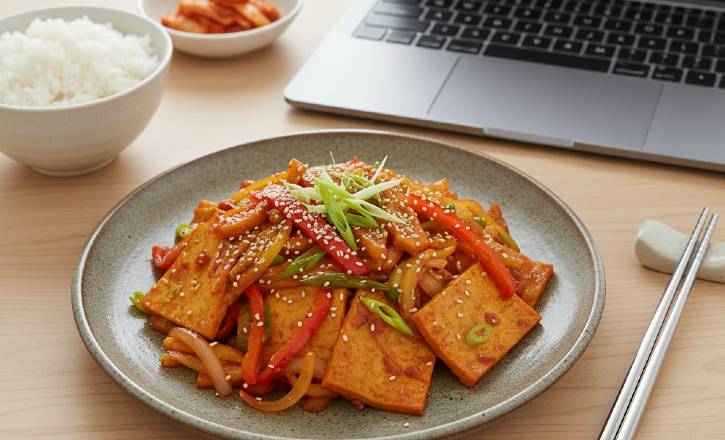
IV. The Emulsion of the Glaze Pour the soy sauce and liquid sweetener over the mixture. Increase the heat slightly. This is the critical moment. We are looking for a reduction that coats the back of a spoon—a nappé consistency. The glaze should encapsulate each strip of eomuk, creating a brilliant, reflective surface that clings rather than pools at the bottom of the dish.
V. The Finishing Aromatics Remove from the heat. Fold in the toasted sesame oil and a handful of toasted sesame seeds. The residual heat will release the volatile oils of the sesame without scorching them.
The Epilogue: The Reward of Rigor
When you plate your Eomuk Bokkeum, observe the light reflecting off the glaze. It should look like polished mahogany.
This dish proves that when we bring technical precision to the “humble” recipes, we honor the ingredients and the culture they come from.
It is a reminder that in cooking, as in life, the way you do one thing is the way you do everything.
FAQ
How do I prevent the fish cakes from becoming rubbery?
Texture is a byproduct of temperature.
If you overcook the eomuk, you drive out the moisture, leaving the proteins tight and bouncy. Keep your sauté brief and focused on the glaze development.
Can I achieve the same sheen without corn syrup?
The sheen is a result of the viscosity of the sweetener. While honey or cane sugar can provide flavor, corn syrup provides the superior ‘mirror’ finish that defines a professional-grade glaze.
If substituting, ensure you reduce your liquid further to compensate.
Why add the sesame oil only at the very end?
Sesame oil is a finishing oil, not a cooking oil. Its beauty lies in its delicate aroma. Exposing it to prolonged heat destroys its nuance.
We treat it with the same reverence we would a fine extra virgin olive oil.