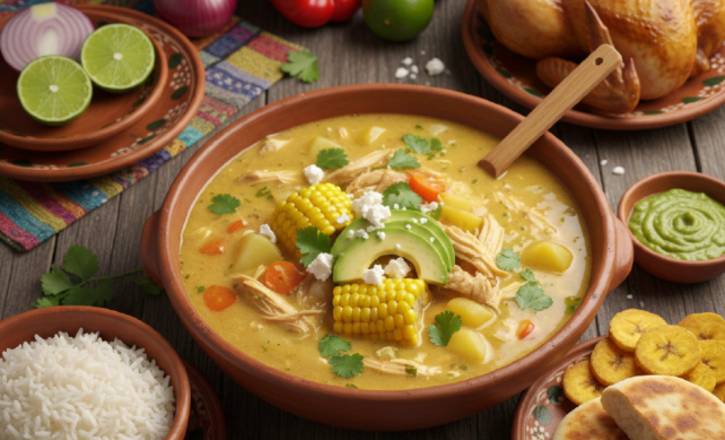
In the culinary arts, we often speak of “soulful” cooking—dishes that carry the weight of tradition and the warmth of home.
The Chupe de Pollo, a cornerstone of Venezuelan cuisine, is exactly that. However, to the professional eye, soulfulness does not excuse a lack of precision. A true Venezuelan chicken chupe recipe is a sophisticated exercise in texture and layering. It is a chowder defined by its creaminess, the sweetness of corn, and the saline punch of fresh cheese.
To master it, one must treat the humble corn kernel and the poached chicken breast with the same reverence as a truffle or a scallop. We are not merely making soup; we are constructing a balance of richness and clarity.
The Mise en Place: Components of Character
The integrity of your Chupe depends entirely on the preparation of your components. We do not simply “chop”; we prepare with intent.
- The Poultry: Use bone-in breasts poached gently in a court-bouillon. This ensures the meat remains succulent and provides a fortified stock as your base.
- The Corn: Seek out the sweetest yellow corn. We will use two textures: whole kernels for “pop” and a purée to provide the soup’s foundational body.
- The Dairy: Heavy cream and queso blanco (or a firm feta if necessary). The cheese should be cut into precise 1/4-inch cubes to ensure uniformity in every spoonful.
- The Aromatics: A fine brunoise of white onion, leek (the white part only), and garlic, sweated slowly to translucent perfection without a hint of color.
The Process: Executing the Venezuelan Chicken Chupe Recipe
- Sweating the Aromatics: In a heavy-bottomed Dutch oven, melt unsalted butter over low heat. Add your onion, leek, and garlic. We are looking for “sweating,” not sautéing. The goal is to release the sugars and soften the fibers without any browning.
- Developing the Base: Add your corn purée and a touch of flour to create a light roux. Slowly whisk in your fortified chicken stock. Bring it to a simmer and skim any impurities that rise to the surface. Clarity of flavor begins with a clean broth.
- The Architecture of Texture: Incorporate your whole corn kernels and diced potatoes (Yukon Gold for their waxy, creamy interior). Simmer until the potatoes are “fork-tender”—a term that implies resistance followed by a clean break.
- Tempering the Cream: To prevent the soup from breaking, temper your heavy cream by adding a small amount of hot broth to the cold cream before stirring the mixture back into the pot. This creates a seamless emulsion.
- The Final Fold: Fold in your shredded poached chicken. At this stage, the heat should be minimal; we are merely warming the protein, not cooking it further.
The Finish: The Ritual of the Garnish
In a Chupe, the garnishes are not decorative; they are essential flavor profile participants.
Just before serving, place a few cubes of fresh cheese and slices of ripe avocado at the bottom of a warmed bowl. Ladle the hot soup over them. The residual heat will soften the cheese just enough to make it “squeaky” and pliable, while the avocado adds a cold, fatty contrast to the savory broth.
Finish with a singular, centered sprig of cilantro or a delicate chiffonade.
Conclusion
A Venezuelan chicken chupe recipe is more than the sum of its parts. It is a lesson in how technique can elevate tradition. By focusing on the precision of the dice, the temperature of the dairy, and the quality of the stock, we transform a rustic Andean chowder into a dish of profound elegance.
It reminds us that no matter where a recipe originates, the standards of the professional kitchen remain the same: respect the ingredient, master the technique, and always cook with a sense of purpose.
FAQ
1. What is the defining characteristic of a professional Chicken Chupe?
The hallmark of a refined Chupe is its emulsion. While many rustic versions are thin or inconsistently chunky, a professional execution focuses on a velvety “body” created by the corn purée and tempered cream.
It should coat the back of a spoon elegantly, providing a luxurious mouthfeel that supports the solid components.
2. Can I use frozen or canned corn for this recipe?
In the pursuit of excellence, freshness is paramount. Fresh summer corn provides a “snap” and a natural milk (leche de chivato) that frozen alternatives lack.
However, if you must use frozen corn, ensure it is thoroughly thawed and patted dry to avoid introducing excess water, which would dilute the integrity of the broth.
3. Why do we poach the chicken separately instead of simmering it in the soup?
Precision in temperature is key. If you simmer chicken breast directly in the soup base, you risk overcooking it by the time the potatoes are tender, resulting in a stringy, dry texture.
By poaching it gently in a controlled court-bouillon, we ensure the poultry remains succulent. We then fold it in at the very end simply to warm it through.
4. My cream often “breaks” or curdles; how do I prevent this?
This is a common failure of heat management. Dairy should never be subjected to a violent boil. By tempering the cream—gradually whisking hot liquid into the cold cream before adding it to the pot—you stabilize the proteins.
Keep the soup at a gentle simmer (shiver) thereafter; never let it reach a rolling boil.
5. What is the best substitute for Venezuelan Queso Blanco?
We look for a cheese that maintains its shape when heated. A firm Halloumi or a mild Feta rinsed of its brine are excellent substitutes.
The goal is to have a cheese that softens and becomes slightly elastic in the hot broth without melting into a shapeless pool.
6. Is the avocado truly necessary as a garnish?
The avocado is not a garnish; it is a functional component. It provides a necessary temperature contrast—cold against hot—and a fatty richness that balances the saltiness of the cheese and the sweetness of the corn.
It completes the architecture of the dish.