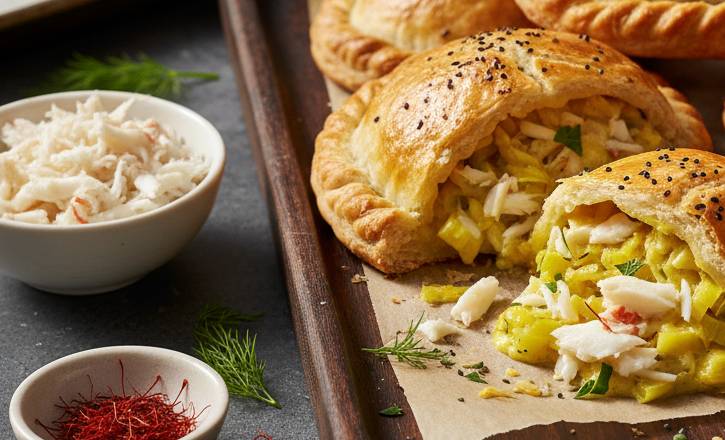
In the professional kitchen, we don’t just cook; we execute a series of intentional movements.
When we discuss how to make crab and saffron leek pasties yummy, we are really talking about the architecture of flavor. We are looking for that elusive tension between a shatteringly crisp crust and a filling that tastes of the tide and the garden.
The pasty is a humble vessel, historically a tool for the working man. But when we introduce Dungeness crab, the golden soul of saffron, and the gentle sweetness of butter-melted leeks, we elevate it. We turn a simple hand-pie into an extraordinary experience.
The Architecture of the Pasty
To achieve what some might call a “yummy” result, we must focus on the Pâte Brisée (the dough) and the Mise en Place (the preparation). If your ingredients are cold and your technique is precise, the result will be undeniable.
The Components
For the Pastry (Pâte Brisée):
- 250g All-purpose flour (chilled)
- 150g Unsalted high-fat butter (cut into small cubes and frozen for 10 minutes)
- 1 tsp Fine sea salt
- 60ml Ice-cold water (as needed)
For the Aromatic Filling:
- 300g Fresh lump crab meat (picked over for shells)
- 2 Large leeks (white and light green parts only, finely cleaned and sliced)
- 1 pinch Saffron threads (bloomed in a tablespoon of warm heavy cream)
- 30g Unsalted butter
- 1 tbsp Crème fraîche (to bind)
- 1 tsp Fresh chives, minced
- Lemon zest (a microplane’s worth)
The Execution
I. The Dough: A Lesson in Temperature
The secret to a flaky crust is maintaining the integrity of the butter. We want “pea-sized” chunks of fat that steam in the oven, creating layers.
- Combine the flour and salt. Incorporate the chilled butter quickly with your fingertips or a pastry blender.
- Add the ice water a tablespoon at a time until the dough just holds together.
- The Rest: Wrap the dough and chill for at least one hour. We must allow the gluten to relax; a stressed dough is a tough dough.
II. The Filling: Sweat, Don’t Brown
- The Leeks: In a small sauté pan over low heat, melt the butter. Add the leeks and a pinch of salt. We are “sweating” them—drawing out moisture without adding color.
- The Saffron: Add the bloomed saffron and cream to the leeks. The aroma should be intoxicating—earthy and floral. Let this cool completely.
- The Marriage: In a chilled bowl, gently fold the cold leeks into the lump crab meat. Add the crème fraîche, chives, and lemon zest. Season with precision.
III. Assembly: The Hand-Held Art
- Preheat your oven to 375°F (190°C).
- Roll your dough to a thickness of 1/8 inch. Cut out 5-inch circles.
- Place a generous spoonful of the crab mixture in the center. Brush the edges with a simple egg wash (one yolk, one teaspoon of water).
- Fold the dough over and crimp the edges with a fork or a traditional rope-braid.
- The Vent: Cut a small slit in the top to allow steam to escape. This prevents the pastry from becoming soggy.
IV. The Bake: Developing the Crust
- Brush the tops with egg wash and a sprinkle of Maldon sea salt.
- Bake for 20 to 25 minutes until the crust is a deep, uniform golden brown.
The Final Touch
When you take these out of the oven, the smell of saffron and toasted butter will fill the room. This is why we cook.
Let them rest for five minutes on a wire rack. This allows the internal juices of the crab and leeks to set, ensuring that every bite is a perfect equilibrium of textures.
While the casual observer may simply say these are “yummy,” you will know that their success is the result of respect for the ingredient and the mastery of the process.
FAQ
1. Why must the leeks be cooled before mixing with the crab?
Temperature control is the foundation of culinary discipline. If you add warm, sweated leeks to fresh crab, you will begin to “cook” the delicate proteins of the crab prematurely.
Furthermore, a warm filling will melt the fats in your pastry dough before it hits the oven, destroying the flakiness of the crust. Always chill your filling to maintain the integrity of the dough.
2. Can I use canned crab meat for this recipe?
While you can, I would encourage you to seek out fresh lump or backfin crab meat. Canned varieties often sit in a brine that masks the natural, oceanic sweetness of the crustacean.
If you must use canned, rinse it gently and pat it very dry; excess moisture is the enemy of a crisp pasty.
3. What is the purpose of “blooming” the saffron in cream?
Saffron is fat-soluble. By steeping the threads in a small amount of warm heavy cream, you unlock the full spectrum of its golden color and hay-like aroma.
If you toss dry threads into the batter, the flavor will be localized and “spotty.” We want a uniform, elegant infusion throughout the entire leek mixture.
4. My pastry dough is crumbly and breaking. How do I fix it?
A crumbly dough usually indicates a lack of moisture or that the butter was not incorporated correctly. However, do not overwork it. Add a teaspoon of ice water at a time and press the dough together rather than kneading it.
Remember: we want to hydrate the flour, not develop the gluten. A “shaggy” dough that holds when pressed is exactly what we are looking for.
5. Why do I need to cut a slit in the top of the pasty?
Steam is a powerful force. As the crab and leeks heat up, they release moisture. Without a vent, that steam will be trapped, causing the pastry to puff up and then turn soggy from the inside out.
A small vent allows the steam to escape, keeping the interior moist and the exterior shatteringly crisp.
6. How do I achieve that deep, professional golden-brown color?
The secret lies in the egg wash. Using a high-quality egg yolk mixed with a tiny pinch of salt (which breaks down the proteins in the yolk) creates a lacquer-like finish.
This process, known as the Maillard reaction, is what gives the pasty its visual appeal and a slight, savory crunch on the surface.