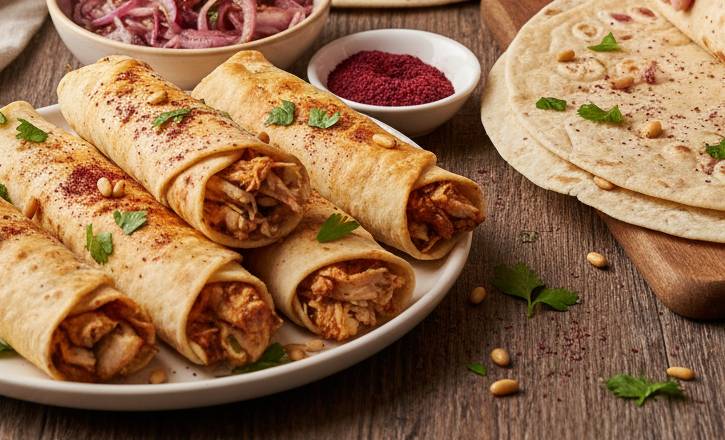
Cooking, at its most fundamental level, is about honoring the history of a dish while applying the discipline of modern technique.
Musakhan—the soul of Palestinian cuisine—is a magnificent study in equilibrium. It is a dish that relies on the harmony between the sharp acidity of sumac, the deep sweetness of caramelized onions, and the luxurious, peppery finish of high-quality olive oil.
When we discuss how to make musakhan chicken rolls, we are moving away from the traditional large-format flatbread and toward a more composed, elegant presentation. We are looking for a singular, perfect bite: a shatteringly crisp exterior yielding to a tender, aromatic interior. This is not just a recipe; it is a lesson in the patience of caramelization and the precision of the fold.
The Mise en Place: Integrity of Ingredients
The quality of your result will never exceed the quality of your ingredients. For a dish this focused, you must seek out the best.
- The Chicken: Use organic, pasture-raised chicken. We will poach it gently to ensure the proteins remain supple.
- The Sumac: This is the heartbeat of the dish. It must be fresh, vibrant, and a deep burgundy color. It should provide a bright, citrusy lift.
- The Olive Oil: Use a robust, cold-pressed extra virgin olive oil. In Musakhan, olive oil is not just a cooking medium; it is a primary flavor component.
- The Onions: Red onions are essential. Their sugar content allows for a superior caramelization that balances the sumac’s tartness.
The Execution: Step-by-Step
I. The Poach and the Shred
We begin by gently poaching the chicken breast or thighs in a flavored liquid (court-bouillon) with bay leaves, peppercorns, and a hint of cardamom.
- Once cooked through, let the chicken cool in its own liquid to retain moisture.
- Shred the chicken by hand into uniform strips. Hand-shredding creates a better surface area for the oil and spices to cling to than machine-cutting.
II. The Caramelization (The Exercise in Patience)
- In a heavy-bottomed pan, add a generous amount of olive oil—more than you think you need.
- Add finely diced red onions and a pinch of salt. Cook over low heat. We are not looking for a hard sear; we are looking for a slow, translucent transformation into a jam-like consistency.
- Once the onions are soft and sweet, fold in the shredded chicken, a handful of toasted pine nuts, and a very generous dusting of sumac. This is where the flavor “blooms.” Season with precision.
III. The Assembly: The “Cigar” Technique
- For the casing, we use Markook (Saj bread) or a very high-quality phyllo.
- Cut the bread into uniform triangles.
- Brush the bread lightly with the sumac-infused olive oil from your pan. This ensures flavor is built into every layer.
- Place a small, neat cylinder of the chicken mixture at the base.
- Fold the sides in and roll tightly—like a fine cigar. The tension must be consistent; too loose and it falls apart, too tight and it may burst.
IV. The Finishing: The Crisp
- Arrange the rolls on a parchment-lined sheet. Brush the tops with one final coating of olive oil.
- Bake at 375°F (190°C) for approximately 12 to 15 minutes.
- We are looking for a “uniform gold.” The bread should be brittle and crisp to the touch, providing a textural counterpoint to the soft, spiced interior.
The Final Presentation
Serve these rolls immediately while the heat is vibrant. A simple dollop of thick, cold labneh or Greek yogurt—finished with a sprinkle of sumac and a thread of olive oil—is the only accompaniment required.
Understanding how to make musakhan chicken rolls in this manner is about more than just sustenance; it is about the refinement of a heritage classic. When you bite through the crisp veil of the bread into the tart, onion-sweetened chicken, you realize that true “yummy” moments are actually moments of perfect culinary balance.
FAQ
1. Why is the quality of the olive oil so emphasized in this recipe?
In most Western techniques, oil is merely a medium for heat. In Palestinian cuisine, and specifically in Musakhan, the olive oil is a foundational flavor. It acts as a bridge between the sharp acidity of the sumac and the sweetness of the onions.
Using an inferior, refined oil will result in a flat, greasy profile rather than a vibrant, peppery finish.
2. Can I use a food processor to shred the chicken more quickly?
I would strongly advise against it. A food processor shears the muscle fibers, often resulting in a “mushy” or mealy texture.
Shredding by hand allows you to follow the natural grain of the meat, creating long, clean strands that hold the onion-sumac mixture in their crevices. Texture is as important as taste.
3. What is the best way to prevent the rolls from becoming soggy?
Sogginess is usually the result of excess moisture in the onion mixture. After caramelizing your onions, if you see a pool of liquid (not oil, but water released from the onions), you must cook it down further or strain it. The goal is a “jammy” consistency where the onions are coated in oil, not water.
Additionally, a high oven temperature is essential to crisp the bread before the filling can migrate into the crust.
4. My sumac looks dull and tastes dusty. Is it still usable?
Sumac is a berry, and like any fruit product, it loses its vibrancy over time. If it has lost its bright, ruby hue and its sharp, lemony “zing,” it will fail to cut through the richness of the olive oil and chicken.
For the best results, source fresh, high-quality sumac from a reputable spice merchant.
5. Is it necessary to use red onions specifically?
Yes. Red onions have a higher sugar content and a deeper flavor profile than yellow or white onions. When subjected to a long, slow caramelization, they develop a complex sweetness that is the necessary counterweight to the tartness of the sumac.
6. Can I prepare these rolls in advance for a dinner party?
Precision in timing is key. You may prepare the chicken and onion filling up to two days in advance. You can even roll them a few hours before service—provided you keep them covered with a damp cloth to prevent the bread from drying out.
However, they should only be baked immediately before serving to ensure the exterior remains shatteringly crisp.